
St. Ignatius Loyola is a Laudato Si' Action Platform Parish

Laudato Si' Message
We Reverence God in the Wonder of Creation
The Church of St. Ignatius Loyola is a Laudato Si’ parish, embodying the goals articulated by Pope Francis ten years ago in his encyclical Laudato Si’- Praise Be Care for Our Common Home. The encyclical is a compelling document founded in theological convictions that are grounded in scripture, Catholic social teaching, and previous papal documents. It addresses how climate, environmental ecology and related poverty, are moral imperatives in addition to being scientific and societal ones.
Our paradigm of Church requires us to transform ourselves in reverencing God’s creation and contribute both individually and as a community, for a sustainable future.
We will continue our efforts to accomplish this through adopting a parish-wide focus on the seven goals of the Laudato Si’ by aligning our parish’s operations with responses to the cry of the earth; the cry of the poor; ecological economics; adapting sustainable lifestyles; ecological education; ecological spirituality; and community engagement.
We hope that our parishioners, their family and friends will embrace the call of Pope Francis and now Pope Leo XIV to work together toward an integral ecology that is reflected in our personal lives, the life of our parish and in our schools.
Moreover, doing so is truly meaningful and timely for the spiritual practice and parish mission statement goal of Reverencing God in Creation.

Canticle of the Sun
“Most high, all powerful, all good Lord! All praise is Yours, all glory, all honor, and all blessing. To You, alone, Most High, do they belong. No mortal lips are worthy to pronounce Your name.
Be praised, my Lord, through all Your creatures, especially through my Lord
Brother Sun, who brings the day; and You give light through him. And He is beautiful and radiant in all His splendor! Of You, Most High, he bears the likeness.
Be praised, my Lord, through Sister Moon and the stars; in the heavens You have made them bright, precious and beautiful.
Be praised, my Lord, through Brothers Wind and Air, and clouds and storms, and all the weather, through which You give Your creatures sustenance.
Be praised, my Lord, through Sister Water; she is very useful, and humble, and precious, and pure.
Be praised, my Lord, through Brother Fire, through whom You brighten the night. He is beautiful and cheerful, and powerful and strong. Be praised, my Lord, through our sister Mother Earth, who feeds us and rules us, and produces various fruits with colored flowers and herbs.
Be praised, my Lord, through those who forgive for love of You; through those who endure sickness and trial. Happy those who endure in peace, for by You, Most High, they will be crowned.
Be praised, my Lord, through our Sister Bodily Death, from whose embrace no living person can escape. Woe to those who die in mortal sin! Happy those she finds doing Your most holy will. The second death can do no harm to them. Praise and bless my Lord, and give thanks, and serve Him with great humility.
— St. Francis of Assisi

Letter From the Pastor
Dear Parishioners,
In his encyclical, Laudato Si’, Pope Francis encouraged us to be mindful of our responsibility to care for God’s precious gift to us, our common home, planet Earth itself. He reminded us that, as was true from the time of Adam and Eve, we too have been entrusted with the stewardship of all God’s creation. And now our common home is crying out for help. We teeter on the brink of global catastrophe because of our inaction to protect our environment. Natural resources are being plundered at a rate never before experienced. The air we breathe is itself choking for life. Our waterways are polluted, strangled in a tangle of plastic refuse. More and more species are becoming extinct. Dramatic changes in climate patterns are being fueled by human actions that persist with the conceit of ignorance and denial. To fail to act, whether in small or big ways, will only accelerate the human destruction of what God has created.
The Pope’s words are not intended as a doomsday tale. Rather it is his call to action. With God’s grace there is still time for us to unite in common purpose and act intentionally to protect our common home, to safeguard life itself. A global response that will undoubtedly result in the reversal of this downward cycle is only possible if we act at the local level – in our homes, our parish, our local communities, and as a nation. To take liberty with the words of Neil Armstrong, small steps can lead to giant strides.
This Action Platform, drafted by the parish’s Laudato Si’/Care of Creation Ministry, outlines the practical things that we, as a parish and in our homes, can do to change the trajectory of our world. To do nothing would be to succumb to the numbness of being overwhelmed by the magnitude of the problem. To do even a little will assuredly lead us to significant ways of changing our lifestyles of overconsumption and waste. The future of our planet is within our hands by the simplest of tasks, like turning off unnecessary lighting, using products manufactured from sustainable materials, and using recycling bins that are ubiquitous, but more often than not unused.
It is my ardent hope that we will heed the words of Pope Francis and now Pope Leo XIV to act in a manner that manifests, in concrete ways, our care for our common home. The challenge for us is to live in a way that reflects our belief and acceptance of the words from the Book of Genesis at the end of each day of creation, God saw that it was good. May we be blessed with an abiding trust in God’s words and protect for future generations all that God has created.
Dennis J. Yesalonia, S.J., Pastor
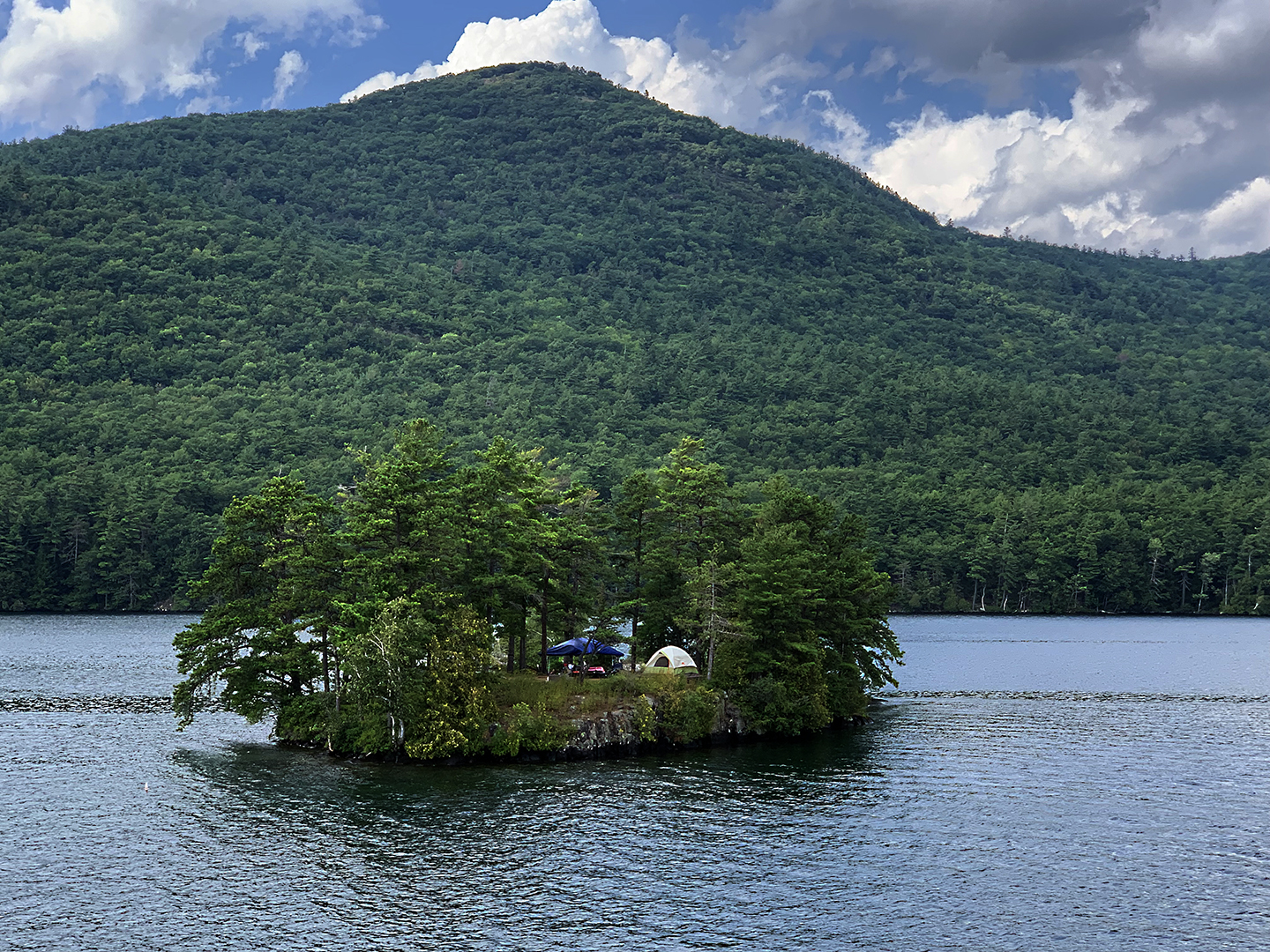
Father General, Arturo Sosa, S.J. Message to Jesuit Institutions
Fr. Arturo Sosa, the Superior General of the Society of Jesus “extends an earnest invitation to all to join the process of the Laudato Si’ Action Platform, to deepen our ecological conversion, to continue to integrate the objectives of Laudato Si’ into our lives and apostolates, to take concrete and bold action to address the crisis affecting our common home as a dimension of our mission of reconciliation and justice that seeks to restore balance with the environment and to dismantle structures of injustice in order to re-establish our relationship with God.”
We all know that our planet is suffering an unprecedented social and ecological crisis, due in large part to human acts. We have upset the balance between God, creation and humanity and we are experiencing the consequences of this disruption. The cry of the poor and the earth speaks of ecological destruction and the loss of cultural richness caused by a mind-set of exploitation. Thus, issues such as climate change, irresponsible mining practices, consumer-driven overproduction, or the prioritization of economic parameters over human development are just manifestations of this disruption in which vulnerable communities – children, the elderly, indigenous peoples or migrants – are more exposed and suffer the consequences to a greater extent.
The Laudato Si’ Action Platform is part of the synodal process that the Catholic Church is undergoing, in which various individuals, institutions and networks of the Society of Jesus are already participating. It is a concrete way of deepening our commitment to the care of the common home that is integral to the Universal Apostolic Preferences, joining our efforts with those of people and institutions around the world, committed to walk together towards the formation of a global community, a human family determined to realize God’s plan in which equilibrium is achieved between human life and the environment that makes it possible.
As a responsible citizenry of this planet, let us together commit to do our part to care for our Common Home.
— Father General, Arturo Sosa, S. J. (Excerpts from his message.)
Link to his full video message: https://www.youtube.com/watch?v=VmuWl1_eCqQ

Laudato Si': A Call to Embrace Faith and Science
Faith and science are complementary, not in opposition to one another. We know from our Catholic faith that God created the world, and His creation is beautiful – something we should honor and protect. We also know that science tells us that the Earth is facing ecological challenges never seen before.
The Earth’s climate is changing faster than at any point in the history of modern civilization, and its natural resources are depleting. Human-caused climate change is damaging our communities—locally, nationally, and globally.
Laudato Si’ calls us as people of faith to embrace environmental science and the science of climate change and conservation, to protect and preserve the environment for future generations because the Earth is God’s wondrous creation and gift to humanity.
The Basic Science of Climate Change
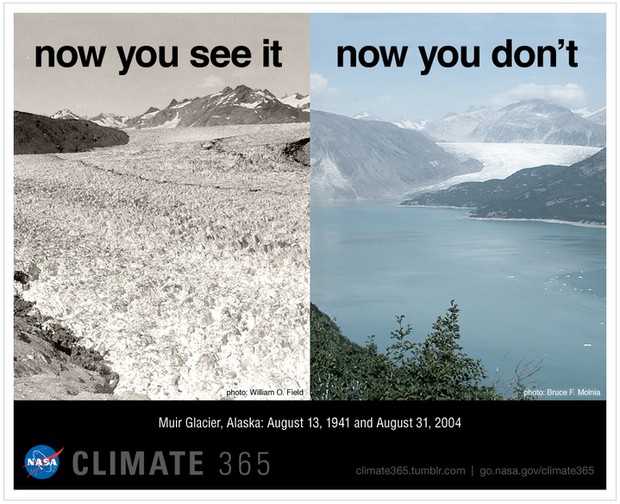
Climate scientists are in global consensus that the Earth’s atmosphere has been heating up rapidly since the early 1800s, and more rapidly in the last century. Carbon is the main building block of life on Earth, and it is constantly moving between land, water, beings, and the atmosphere.
Since the Industrial Revolution our burning of fossil fuels such as coal, oil, and natural gas in our homes, cars, power plants, and factories has released large amounts of carbon dioxide or CO2 into the atmosphere. This is called the carbon cycle.
The build-up of CO2 in the atmosphere has already led to global warming and shifts in global climatic patterns. As temperatures increase, coral reefs are disappearing. Ice-free summers will become common in the Arctic and polar ice caps are melting and irreversible loss of many marine and coastal ecosystems are occurring. Extreme weather events, such as flooding, fires, storm surges, and heat waves may be amplified by the loss of Artic summer sea ice.
Climate change may well be the most urgent and complicated problem that humanity has ever faced.
The Seven Goals of Laudato Si'
“Everything is related, and we human beings are united as brothers and sisters on a wonderful pilgrimage, woven together by the love God has for each of his creatures and which also unites us in fond affection with brother sun, sister moon, brother river and mother earth” (Laudato Si’).
Response to the Cry of the Earth: greater use of clean renewable energy and reduction of fossil fuels to achieve carbon neutrality efforts to protect and promote biodiversity guaranteeing access to clean water for all, etc.
Response to the Cry of the Poor: defense of human life from conception to death and all forms of life on Earth, with special attention to vulnerable groups such as indigenous communities, migrant children at risk through slavery, etc.
Ecological Economics: sustainable production, fair-trade, ethical consumption, ethical investments, divestment from fossil fuels and any economic activity harmful to the planet and the people, investment in renewable energy, etc.
Adoption of Simple Lifestyle: moderation in the use of resources and energy, avoid single-use plastic, adopt a more plant-based diet, and reduce meat consumption, greater use of public transport and avoid polluting modes of transportation, etc.
Ecological Education: re-think and re-design educational curricula and educational institution reform in the spirit of integral ecology to create ecological awareness and action, promoting the ecological vocation of young people, teachers, and leaders of education, etc.
Ecological Spirituality: recover a religious vision of God’s creation, encourage greater contact with the natural world in a spirit of wonder, praise, joy, and gratitude, promote creation centered liturgical celebrations, develop catechesis prayer, retreats, formation, etc.
Emphasis on Community Involvement and Participatory Action: care for creation at the local, regional, national, and international levels; promote advocacy and people’s campaigns, encourage rootedness in local territory and neighborhood ecosystems, etc.
St. Ignatius Loyola Responds to the Goals
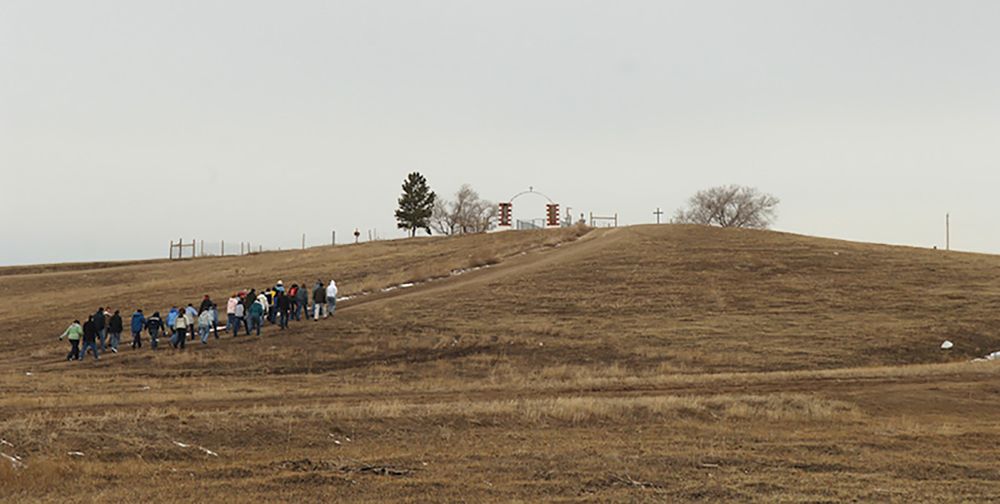
Goal One: Response to the Cry of the Earth
Calling for a global ecological conversion, urging individuals and communities to care for our common home and to address the interconnected crises of climate change, biodiversity loss, and social injustice is a responsibility for all.
Actions for individuals, families, parishes, and schools:
☐ Reduce water consumption
☐ Create an Energy Action Plan and set a goal for the Church and Parish House and school
☐ Install Separate Recycle Containers for Paper, Glass, Plastic and Metal
☐ Utilize EPA’s ENERGY STAR ratings when buying new appliances
☐ Compost at home
☐ Get involved in environmental projects
Goal Two: Response to Cry of Those Who Are Poor/Vulnerable
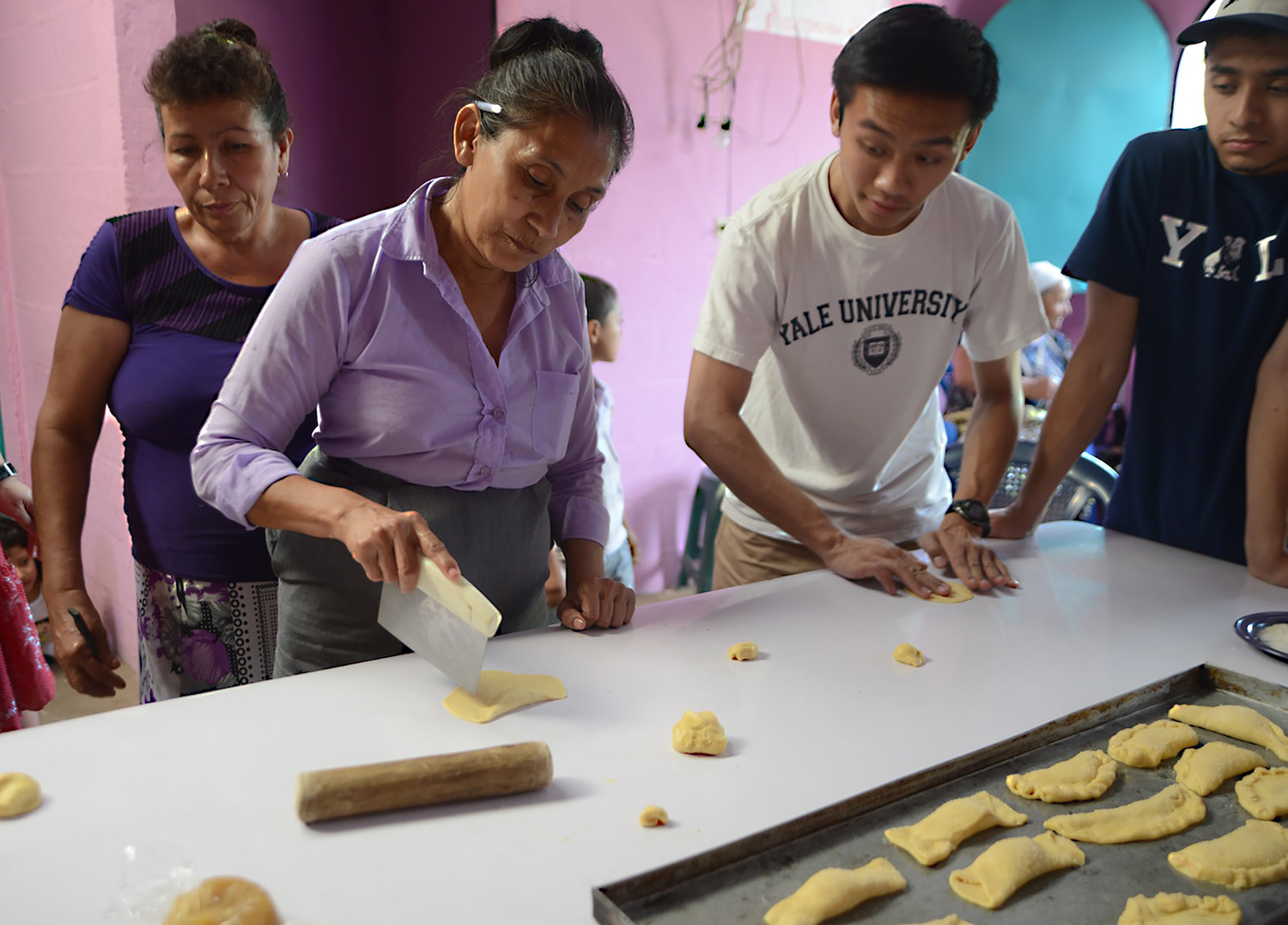
Our active engagement should prioritize areas of the globe and local communities that are the least responsible for climate change but experiencing its most damaging effects and consequences.
Actions for individuals, families, parishes, and schools:
☐ Explore local ecological educational opportunities in your community to learn about environmental justice
☐ Volunteer to do a community clean-up
☐ Know your neighbors in your community and develop relationships with them
☐ Outreach to those who need assistance and respect those who are most vulnerable
☐ Support charities that assist the vulnerable and the poor such as: Bread for the World, Catholic Charities-NYC, Jesuit Refugee Services, New York Common Pantry, City Relief, etc.
Goal Three: Ecological Economics
Ecological Economics acknowledges the need for economic systems that respect the limits of the planet and promote sustainable production and consumption. Understanding the interdependence of human economies and natural ecosystems, while recognizing that a healthy environment is essential for a sustainable human society.
Actions for individuals, families, parishes, and schools:
☐ Work directly or non-directly with non-profit and governmental organizations on housing, food, and green space issues
☐ Reduce meat-based meals
☐ Buy local, fair trade, and sustainably produced food
☐ Model healthy and just purchasing practices in all activities within the parish and at home
☐ Encourage the utilization of public land to nurture sustainable food production and community gardens
Goal Four: Adoption of a Simple Lifestyle
Laudato Si‘ calls us to live more simply. We are called to adopt a prayerful and intentional approach to our purchases, and to be mindful of the toll our choices have on God’s creation and the world we live in.
Actions for individuals, families, parishes, and schools:
☐ Cut down or eliminate single-use plastic such as water bottles
☐ Make conscious consumption choices
☐ Nurture your relationships with family, friends, and community
☐ Recycle, Re-use, Restore, Replenish
☐ Explore conscious travel and transportation, ie: drive less, bike, walk, or use public transportation

Goal Five: Ecological Education
Ecological Education can be integrated into our catechetical programs and liturgical celebrations because our Catholic faith offers a rich array of teachings on the theology of creation, life and human dignity and our role in fostering the common good.
Actions for individuals, families, parishes, and schools:
☐ Organize local environmental educational trips to recycling, compost, energy and water treatment facilities as well as garden conservation groups including Botanical Gardens
☐ Develop Laudato Si’ inspired activities and theme days
☐ Incorporate justice and care for our common home into faith formation programs at all levels
☐ Invite and involve parish religious education, youth ministry and parish schools in living out Laudato Si’
☐ Offer lectures with experts in the field of Climate Change with panel discussion at the church

Goal Six: Ecological Spirituality
Ecological spirituality is an appreciation and recognition of creation as God’s original blessing and God’s revealing presence in nature. Guided by Catholic Social Teaching, we are thereby called to be good stewards of God’s gift, the Earth, our common home.
Actions for individuals, families, parishes, and schools:
☐ Homilies on the integration of Catholic social and moral teaching regarding care for creation
☐ Plan, celebrate and mark the Season of Creation held each September 1 to October 4, including a Season of Creation Mass
☐ Celebrate a seasonal Mass utilizing the new Liturgy for the Care of Creation initiated by Pope Leo XIV in recognition of Laudato Si’
☐ Bring in expert theologians/speakers to lead/guide conversations at parish or parish school sponsored events
☐ Ensure parish and school events and formation opportunities promote the Church’s teaching on climate change, social, racial, environmental, and immigrant justice

Goal Seven: Community Involvement and Participatory Action
We are to engage in public advocacy to work for our public policy. We must continue to be effective advocates of the Laudato Si’ Platform and work for the decisive political action for the common good.
Actions for individuals, families, parishes, and schools:
☐ Use parish and parish school communication channels to spread the message of Laudato Si’
☐ Engage ministries and groups in collaborative efforts on integral ecology
☐ Connect with other New York City parishes through their Care for Creation Committees
☐ Become involved in environmental projects
☐ Support leaders who support the environment and become involved with Catholic Climate Movement and Laudato Si’ Movement to lobby elected representatives to respond urgently to Climate Change efforts

A Prayer for Our Earth from Laudato Si'
“All-powerful God, you are present in the whole universe
and in the smallest of your creatures.
You embrace with your tenderness all that exists.
Pour out upon us the power of your love,
that we may protect life and beauty.
Fill us with peace, that we may live
as brothers and sisters, harming no one.
O God of the poor,
help us to rescue the abandoned and forgotten of this earth,
so precious in your eyes.
Bring healing to our lives,
that we may protect the world and not prey on it,
that we may sow beauty, not pollution and destruction.
Touch the hearts of those who look only for gain
at the expense of the poor and the earth.
Teach us to discover the worth of each thing,
to be filled with awe and contemplation,
to recognize that we are profoundly united
with every creature as we journey towards your infinite light.
We thank you for being with us each day.
Encourage us, we pray, in our struggle
for justice, love, and peace.”
— Pope Francis
Resources
Websites
Laudato Si’ Platform: https://laudatosiactionplatform.org/about/
The Laudato Si’ Encyclical by Pope Francis: https://www.vatican.va/content/francesco/en/encyclicals/documents/papafrancesco_20150524_enciclica-laudato-si.html
Books
Saving Us: A Scientists Case for Hope and Healing in a Divided World by Katharine Hayhoe, PhD
Come Have Breakfast by Elizabeth A. Johnson. CSJ, PhD
An Altar in the World by Rev. Barbara Brown Taylor
Documentary Films
We’re All Plastic People Now. An Emmy-winning documentary introduced by Ted Danson featured at the 2024 Santa Fe Film Festival.
Kiss the Ground, Common Ground. Celebrities and farmers introduce the benefits of regenerative farming practices. Critically acclaimed and winner of the 2023 Tribeca Film Festival Human/Nature Award.
The Biggest Little Farm. A documentary about John and Molly Chester’s journey to create a biodiverse, regenerative farm on 200 acres of land in Southern California. They trade their city life in Los Angeles for a farm called Apricot Lane Farms.
YouTube and Podcasts
Mary Evelyn Tucker & John Grim-Yale Forum on Religion and Ecology. https://www.youtube.com/watch?v=XB4vhKVRtjY and https://www.youtube.com/playlist?list=PLzi07WlvVry8jh6DXsL3p0lq-iMk0Zi_3
Journey of the Universe. https://www.youtube.com/watch?v=TGNOiLz_vJs
Journey of the Universe: Brian Swimme. https://www.youtube.com/watch?v=ulXfIv3wHvg
Acknowledgements
Content and editing by Nicholas Nacarri, Geraldine Rizzo, and Jean Santopatre
Photos by Jean Santopatre